June 11, 2026

At the Library: Sense-making and Labor Movements

Dear Friend,

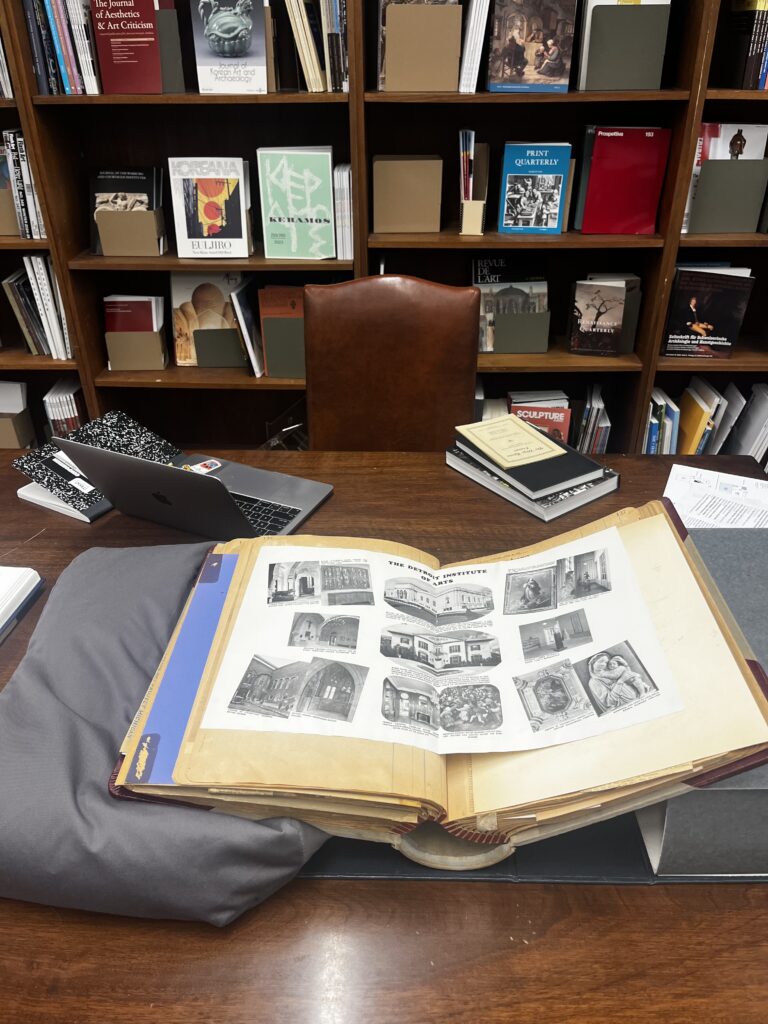
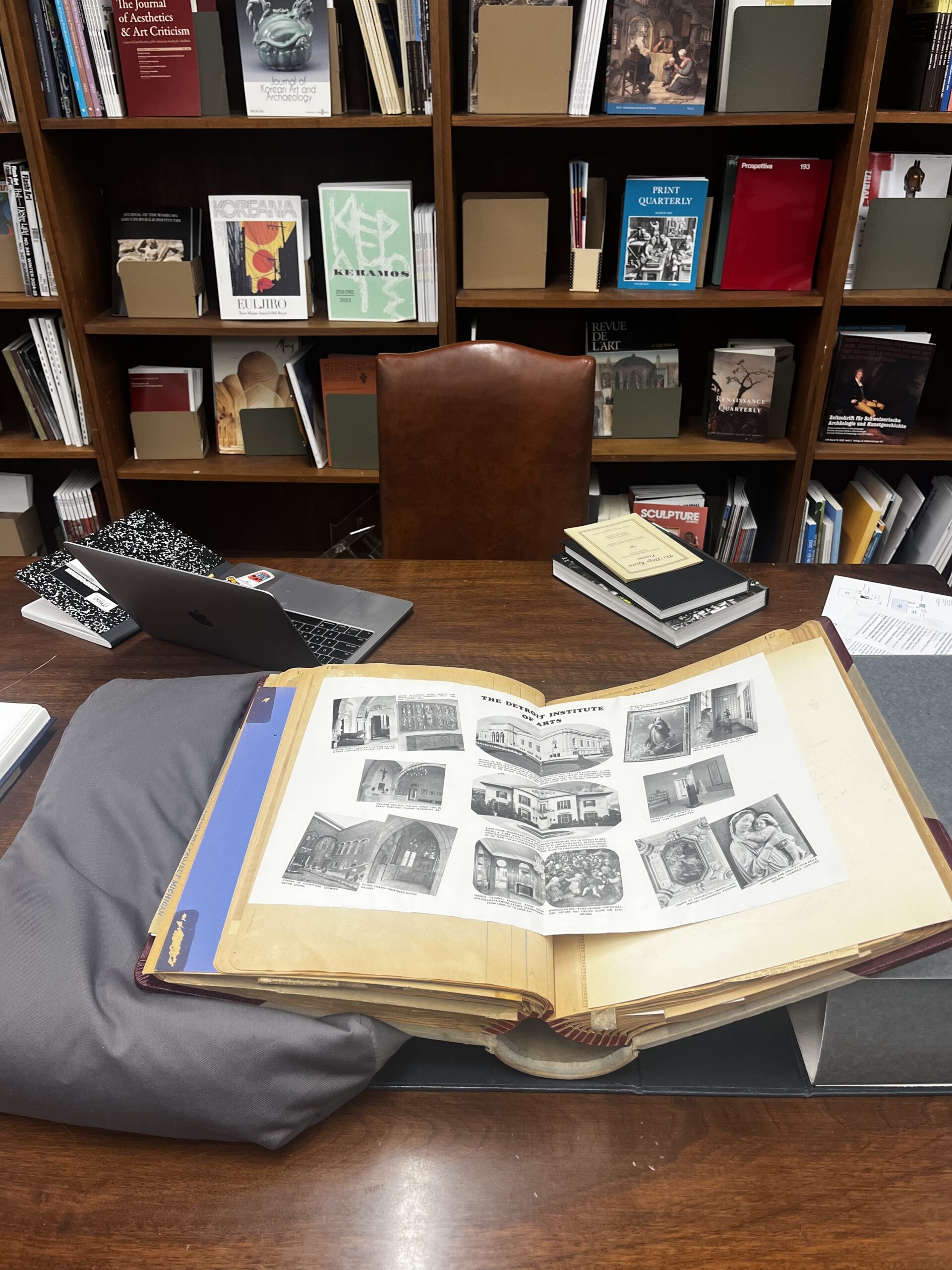
Lately, you can find me at the library.

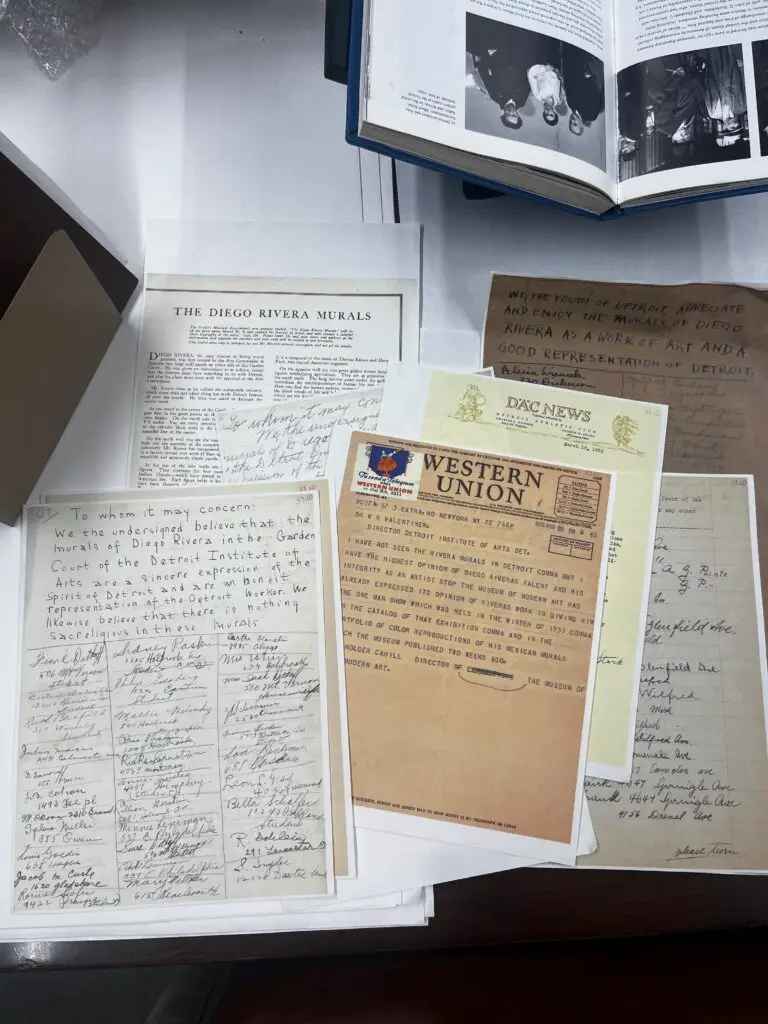
Making friends with archivists, skimming through stacks, looking for source material to shape the next iteration of Visual Voice.

But honestly, the research is also feeding my soul as an artist and Art Historian. It makes me smile.

To me, being a student of history means being more skilled at picking up patterns. Understanding the roots of culture makes you more attuned to how certain ideologies and behaviors repeat and evolve.

I’ve been time-traveling. Revisiting the labor movements of the late 1920s, the collapse of capital and the poverty proliferated by the Great Depression, and the blend of social programs — mostly the WPA — and mutual aid moments that followed. 

One question sits at the surface of my mind as I sort through it all: How might the labor movement and the art made during the 1920s and 30s inform the way I/we move today?

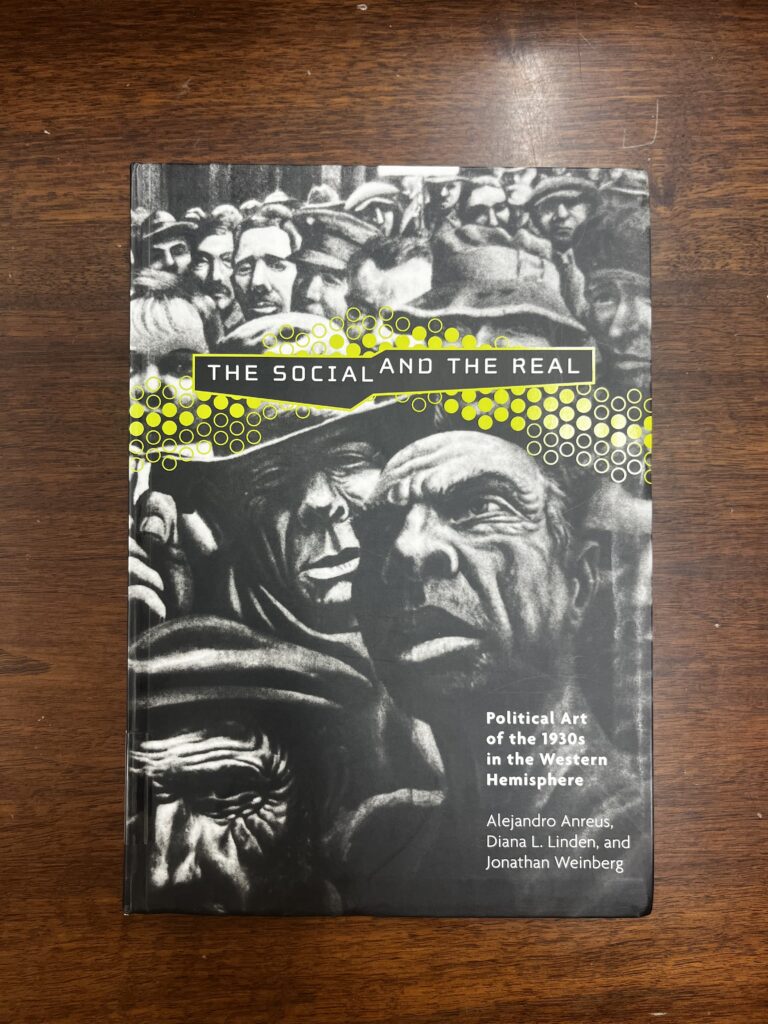
Some answers have emerged by sitting with Diego Rivera’s Detroit Industry murals. And through reading The Social and the Real: Political Art of the 1930s, the essay by Anthony W. Lee in particular.

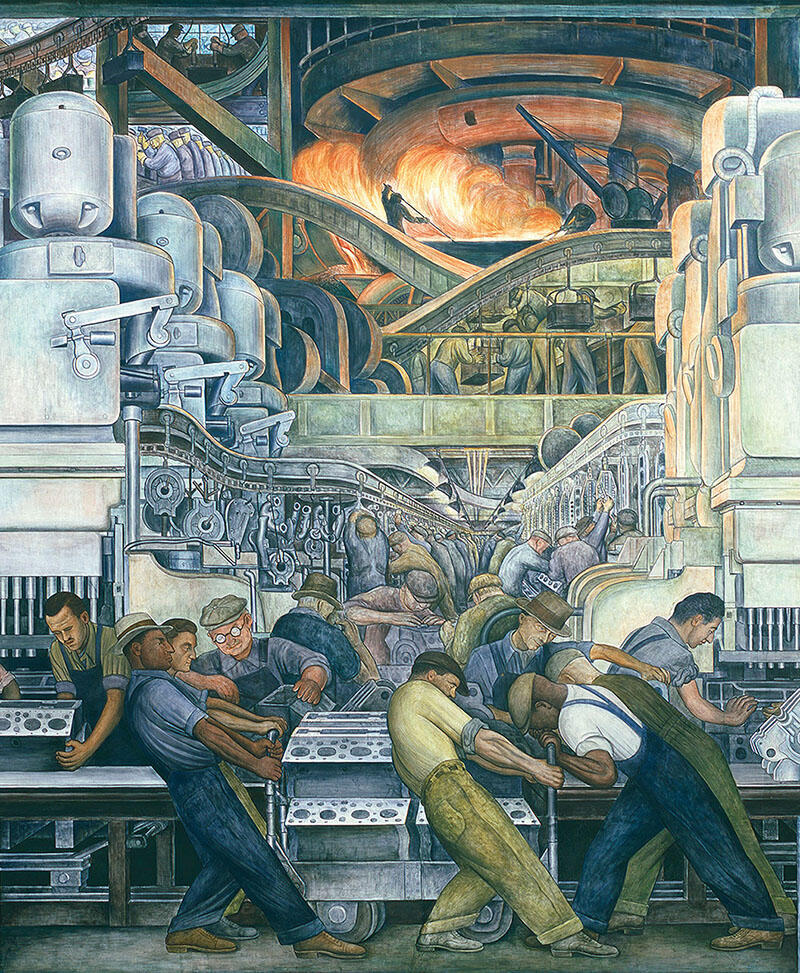
A work of social realism, the Industry murals brings the automotive factory of the 1920s inside the museum to depicts American workers, the laboring class in juxaposition with the manufacturing elite (who preceeded the tech billionaire), in various utopian and dystopian scenes (Lee, 2005).

Diego Rivera, Scene from Detroit Industry Murals, 1932. Ford River Rouge assembly line workers, Detroit Institute of Arts.

To me, the image and the history it holds draw clear parallels to this current moment.

Organized labor in the 1920s was pushing back against automation. These were skilled workers — essentially artisans — who had developed deep expertise in upholstery, molten metal, glasswork. They didn’t want machines to replace them, not unlike the millions of people whose work is being displaced or devalued by AI right now.

Rivera is vision casting in this painting, which I can relate to.

He is laying out a socialist vision that centers the laboring process over the product being produced. He’s insisting on a mindset that prioritizes use-value over exchange-value. A future devoid of commodity fetishism, as Lee puts it.

That last idea is where I’ve been resting.

Because it speaks to an aspect of creating that is always true (valuing the process over product).

And it feels like what I’m reaching toward in my latest in-process piece, Rituals of Exchange — an exploration of non-monetary ways of exchanging value.

I’m on the path, trying to figure out what it looks like, and will report back soon. 

Yours truly,

M
Share

Leave a Reply

Your email address will not be published. Required fields are marked *

This site uses Akismet to reduce spam. Learn how your comment data is processed.